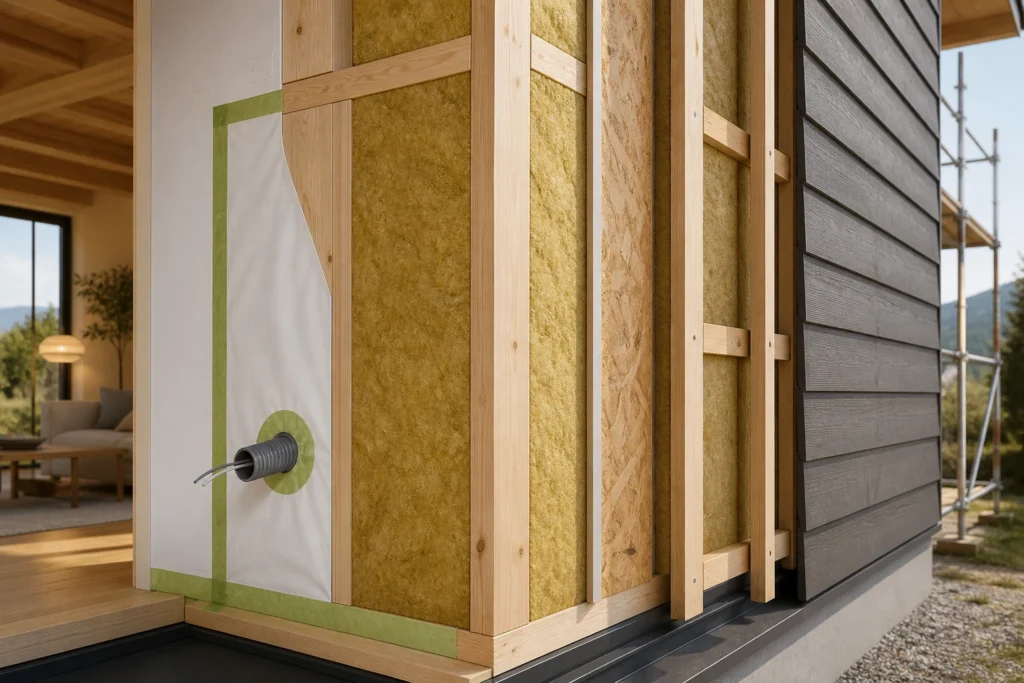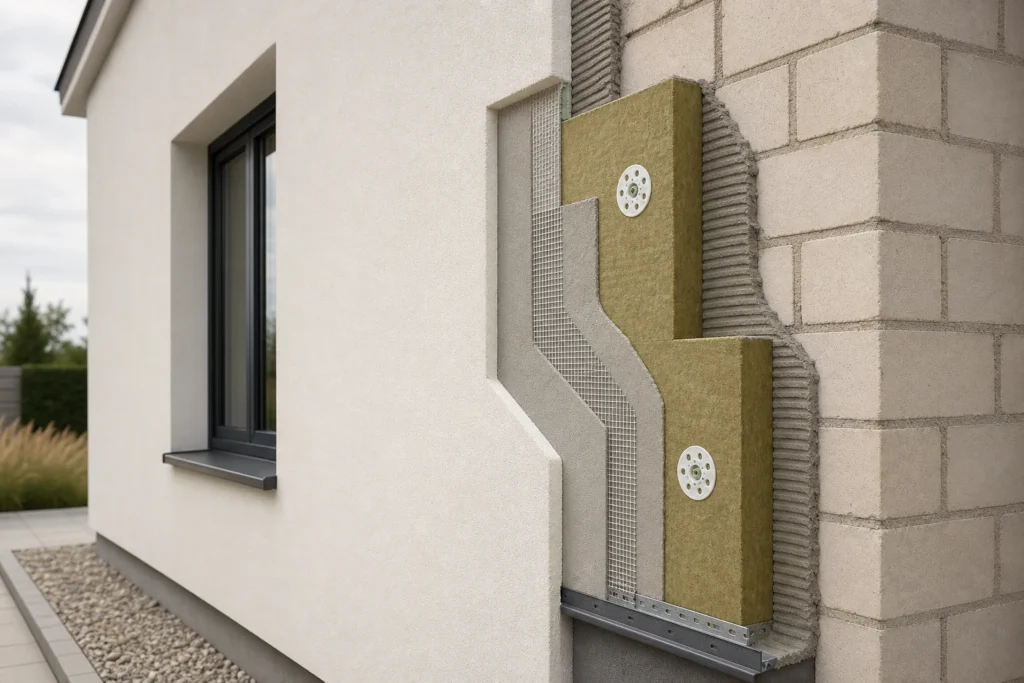
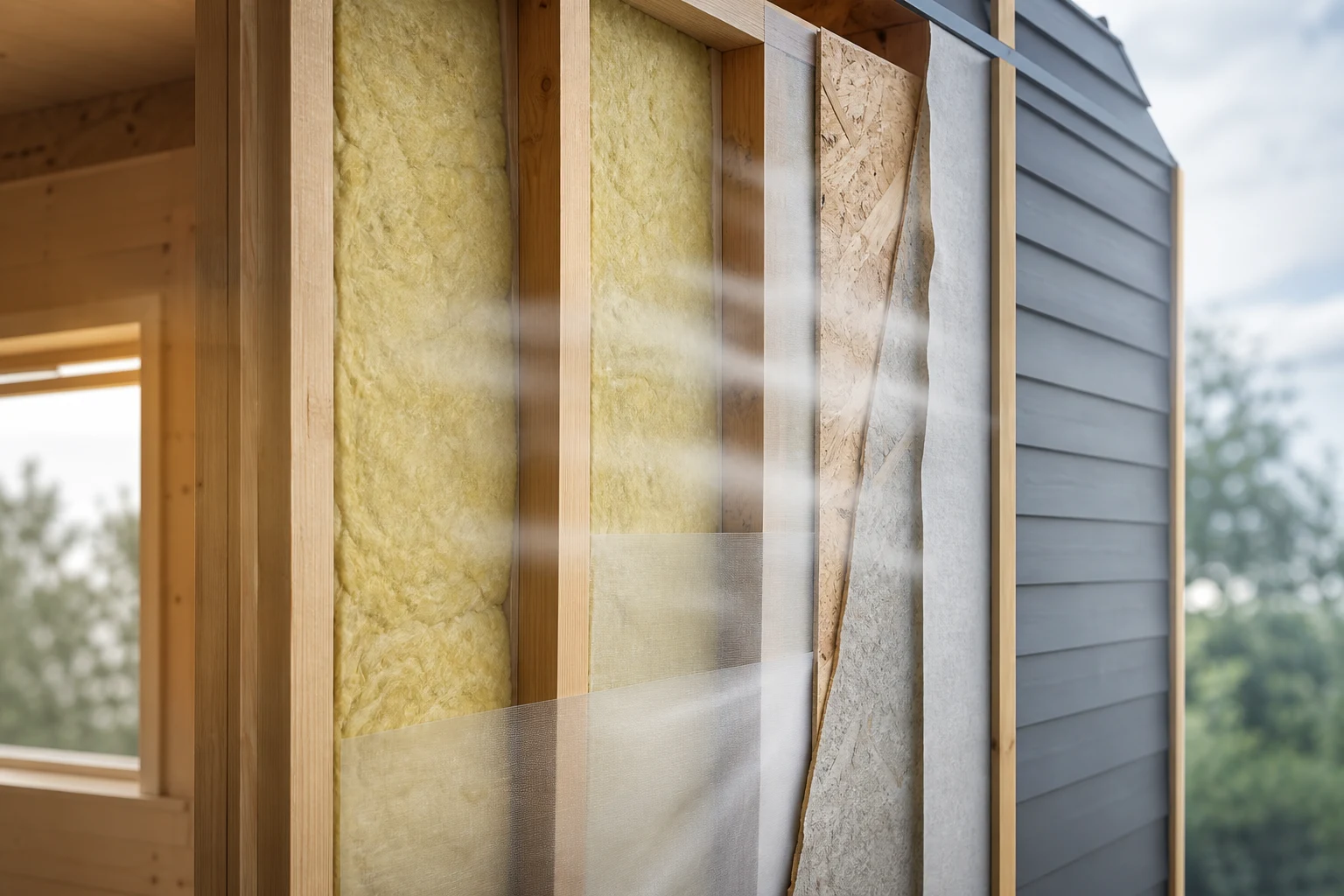
Water vapour permeability is one part of moisture control in a building element. Airtightness, rain protection, ventilation and the arrangement and temperature of its layers also matter. Vapour passing through mineral wool alone does not guarantee that a wall or roof will remain free of condensation.
Water vapour permeability and diffusion resistance factor μ
Water vapour permeability describes how readily vapour passes through a material. The water vapour diffusion resistance factor, μ, is a related but distinct quantity: it compares the material’s resistance with that of a layer of still air of the same thickness. A lower μ means less resistance to vapour diffusion.
Why does it matter in a building assembly?
Water vapour diffuses in response to differences in vapour pressure. In heating conditions this is often from the warmer interior towards the exterior, but the direction can vary. If the layer arrangement and temperatures allow condensation within the assembly, timber, metal components and insulation performance may be affected. The complete construction therefore needs appropriate moisture control.
Mineral wool and vapour permeability
Glass wool and stone wool generally offer high water vapour permeability because of their open fibrous structure. This can support drying in timber and framed constructions, provided the complete wall or roof build-up is designed correctly.
Select the insulation and layer arrangement for the specific construction and the building’s operating conditions. Ask about product selection
For a general overview of mineral wool insulation, see the EURIMA guide. Confirm the properties of the selected Eurowool product in its technical datasheet and Declaration of Performance.