Mineral wool water repellency helps limit wetting by liquid water. It does not make the insulation waterproof or justify installing damp material. Learn how this property differs from vapour permeability and what to check during storage and installation.
Mineral wool water repellency — what does it mean?
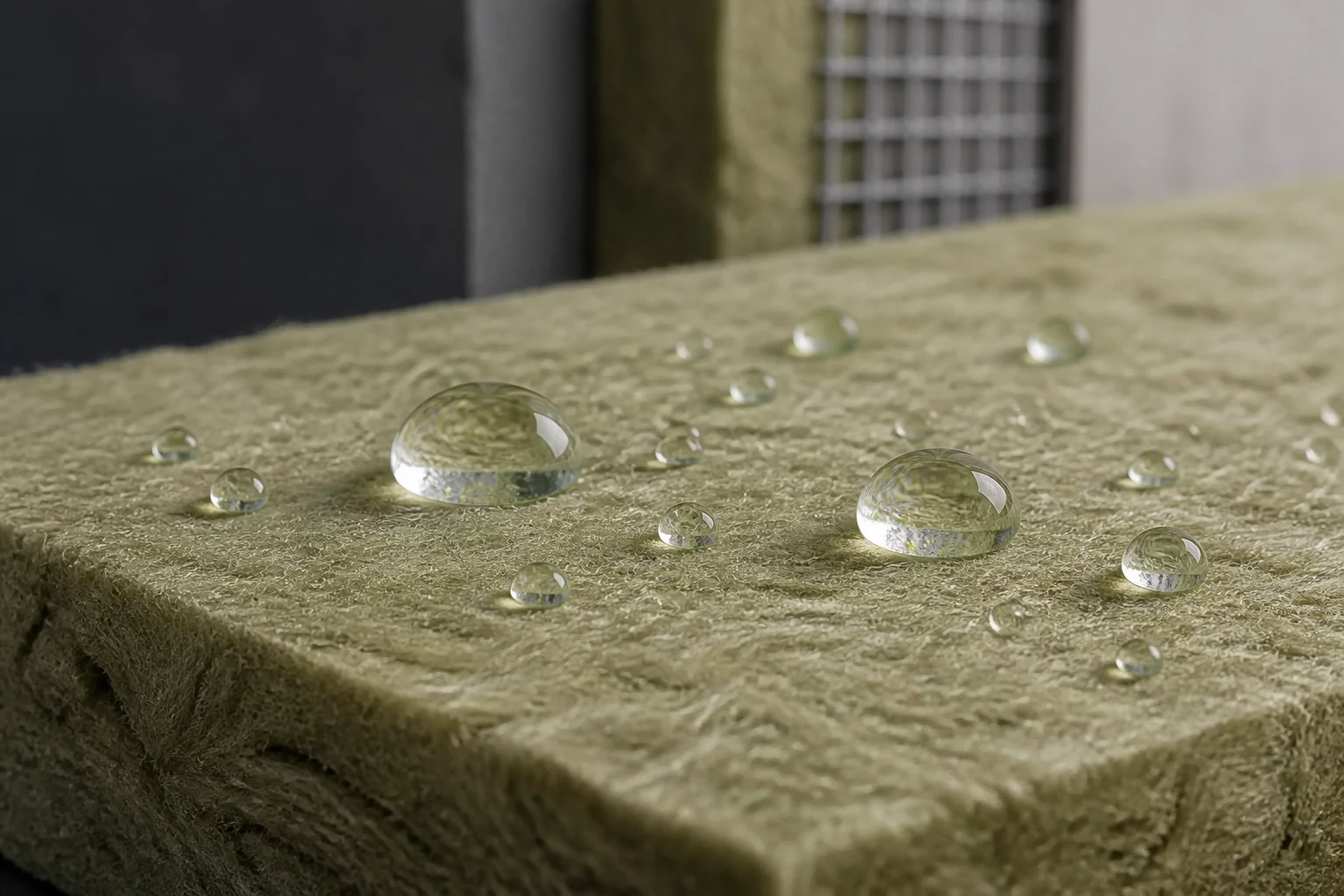
Water repellency is a material’s ability to resist wetting by liquid water. Mineral wool fibres may receive a water-repellent treatment that helps limit liquid water absorption, while allowing water vapour to pass through the open fibre structure. Water repellency does not make the insulation waterproof.
Why does it matter on site?
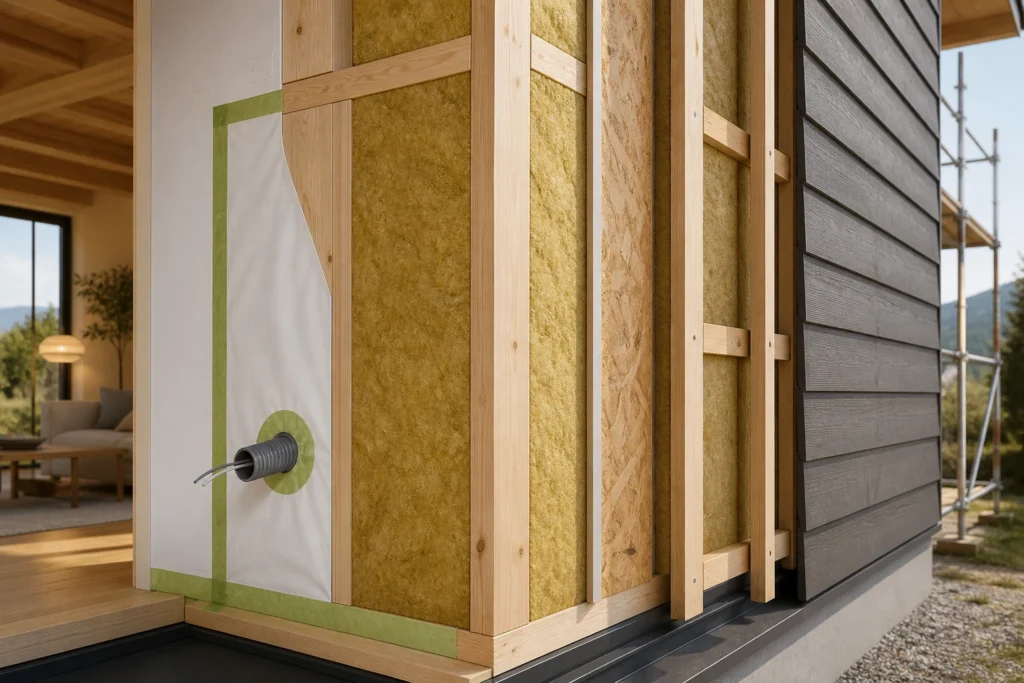
Insulation can be exposed to moisture during transport, storage and installation, for example through rain, condensation or a leaking temporary cover. A water-repellent treatment helps limit water uptake, but it does not guarantee unchanged performance after wetting. Protect the material and check its condition against the manufacturer’s requirements before closing up the assembly.
Water repellency and vapour permeability
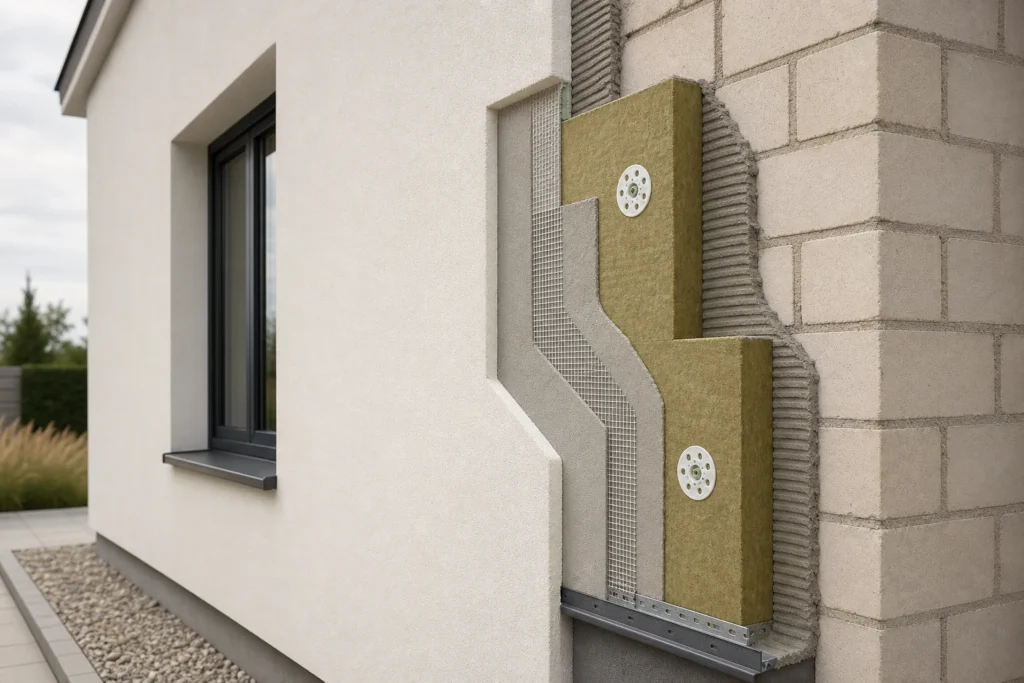
Water repellency concerns liquid water, whereas vapour permeability concerns water vapour. Moisture control requires an appropriate arrangement of all layers, protection from rain and airtight construction. High vapour permeability of the insulation alone does not replace a building-element design or room ventilation.
Compare glass wool and stone wool products and check their declared properties. View products
For a general overview of mineral wool insulation, see the EURIMA guide. Confirm the properties of the selected Eurowool product in its technical datasheet and Declaration of Performance.